
Staining furniture helps to alter the shade of the wood. While natural wood is highly valued for its unique texture, grain pattern, and the warmth it brings to an interior, its natural hue does not always align with the desired design. Sometimes, one might wish to darken light-colored wood, accentuate its grain, or give furniture a richer, more expressive color. In such cases, staining is an ideal solution. This finishing technique allows for a change in the wood's color while preserving the visibility of its natural texture.
What is furniture staining?
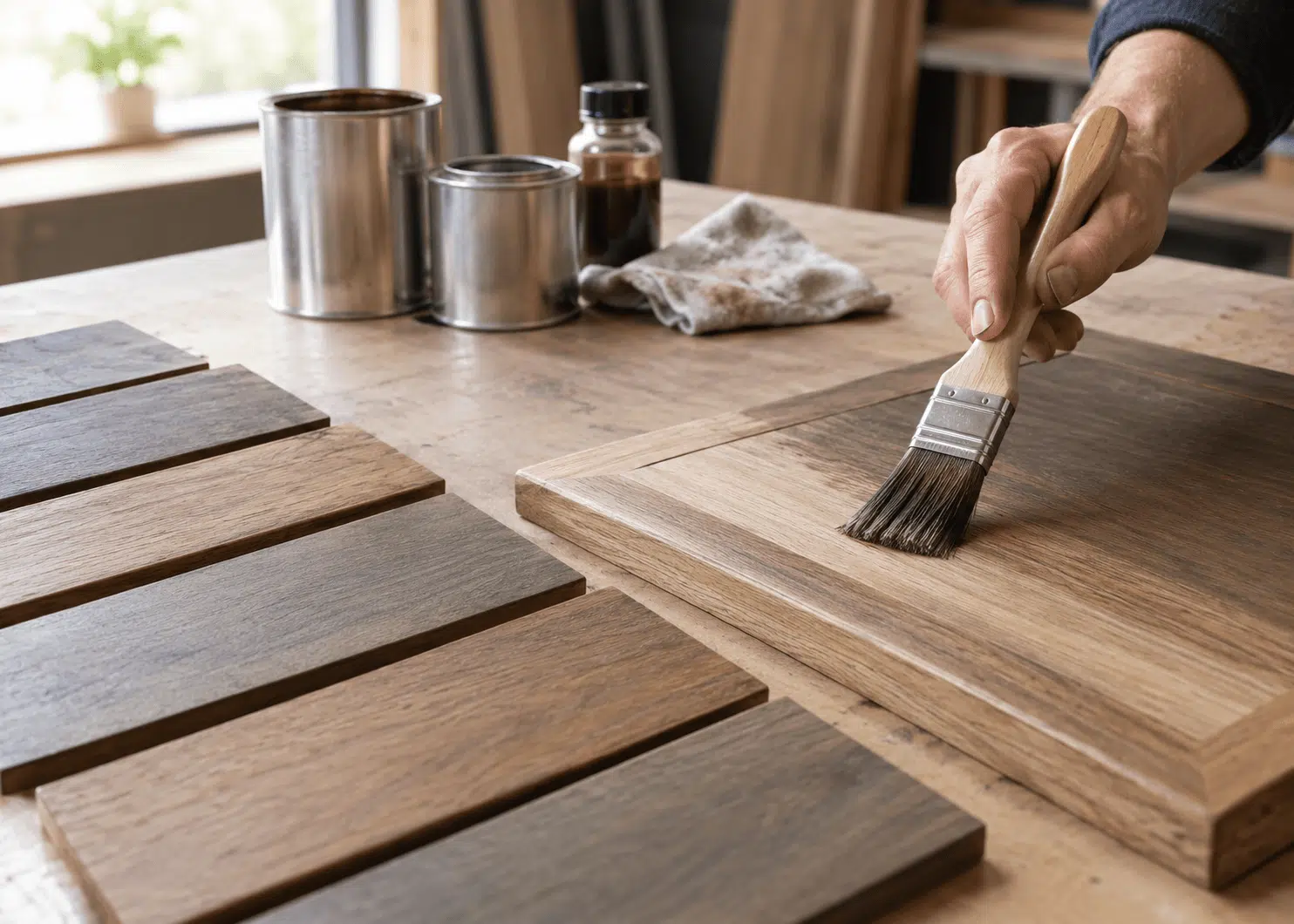
Furniture staining is the treatment of a wood surface with a special coloring agent, called wood stainIt penetrates the wood and alters its shade, but typically does not form an opaque coating like paint does. Because of this, the wood grain remains visible, and the final result looks natural.
Staining wood makes it possible to achieve a variety of shades—from light oak or honey tones to rich walnut, dark brown, or other colors desired for an interior. A well-chosen stain can help highlight the wood grain, create visual depth, and give furniture the intended character.
This finishing method is suitable for tables, cabinets, chests of drawers, doors, shelves, and other wooden items. It is also relevant for furniture manufacturers and for interior designers seeking to coordinate different wooden surfaces while maintaining a cohesive interior style.
How does staining differ from painting and varnishing?
Although staining, painting, and varnishing are frequently used in furniture finishing, each of these processes serves a different function.
Wood staining it is primarily intended for changing the shade of wood. The stain penetrates the surface, allowing the natural texture and grain of the wood to remain visible. This is a suitable choice when you want to refresh the appearance of furniture without completely hiding the natural beauty of the wood.
Painting it allows for changing the color of furniture and, depending on the paint used, partially or completely covering the wood grain. This option is chosen when a uniform surface, a vibrant color, or a specific design effect is desired.
Varnishing it is most commonly used as a protective finishing step. Varnish forms a surface coating that helps protect the wood from the effects of daily use, moisture, and dirt. It can be matte, semi-matte, or glossy, and therefore also influences the final appearance of the furniture.
It is important to understand that these processes can be combined. For example, a stained surface can be additionally lacquered to achieve the desired level of gloss and provide protection.
How to choose the right wood stain?
The choice of wood stain depends on the desired result, the type of wood, and how the piece of furniture will be used. Some products are designed to subtly enhance the wood’s natural tone, while others allow for a more pronounced change in color.
When choosing a wood stain, it is important to consider several aspects:
The desired shade. You should decide whether you want to just slightly darken the wood or give it a completely different tone.
The type of wood. Different types of wood absorb stain differently, so the same product may look different on various surfaces.
The expressiveness of the texture. Staining can highlight the wood grain, but the final effect depends on its structure and the product used.
Additional protection. It is necessary to assess whether the surface will be lacquered or oiled, or if it requires another compatible finishing system.
Before treating the entire piece of furniture, it is recommended to test the chosen wood stain on a small, less visible area or on a sample of the same type of wood. This makes it easier to assess the true shade and avoid an unexpected result.
How does the type of wood and surface preparation affect the final result?
Changing the shade of wood is not just about choosing the right color. The final appearance also depends on the characteristics of the wood itself.
Oak has a distinct texture, so staining can bring out its pattern even more. Ash also has an expressive structure, and pine, due to its properties and different density areas, can absorb the stain differently. This sometimes results in brighter or darker areas on the surface. In each case, it is important to evaluate the properties of the specific wood.
Surface preparation is equally important. Before staining, the wood must be properly sanded, clean, and free of grease, dust, or remnants of old finishes that could hinder the even absorption of the product. An unevenly prepared surface can lead to blotchiness, color variations, or the accentuation of the texture in an undesirable way.
If the furniture was previously varnished, painted, or otherwise treated, it may be necessary to remove the old coating. Only by properly preparing the wood can you expect a more even and higher-quality result.
What wood shades can be achieved through staining?
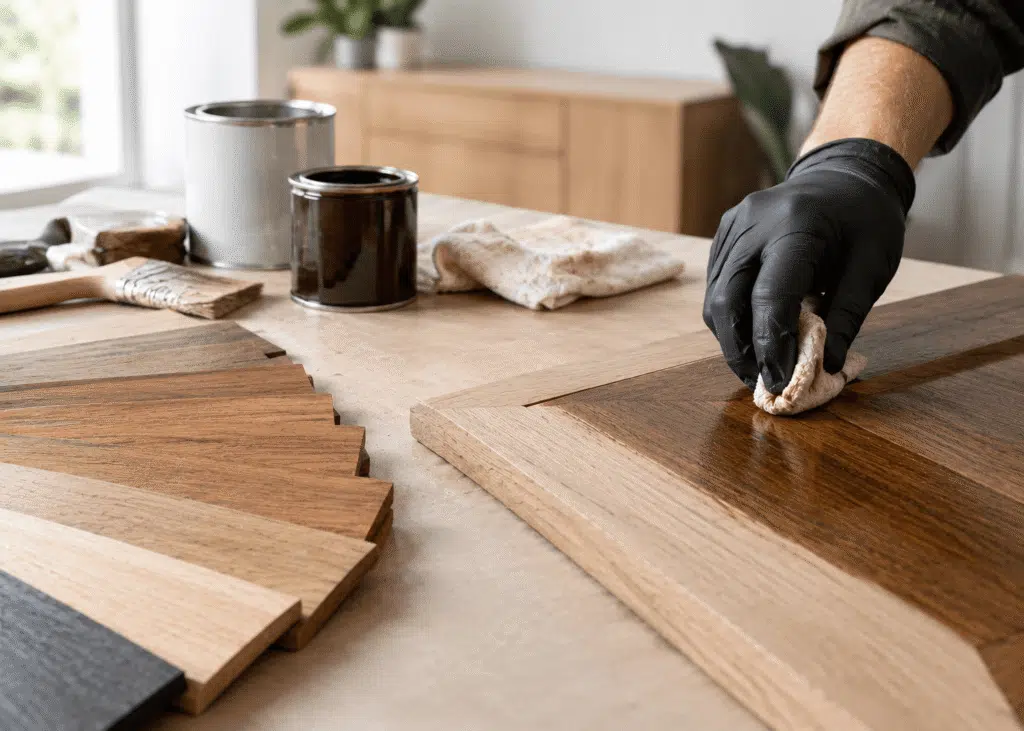
One of the greatest advantages of wood staining is the wide range of design possibilities. Lighter shades help maintain a light, natural look for furniture, while darker ones add greater visual weight and elegance.
Light oak or natural honey tones are perfect for Scandinavian-style interiors. Walnut, chestnut, or dark brown shades are often chosen for classic, modern, or more luxurious interiors. You can also opt for grayish, brownish-gray, or other hues that help harmonize wooden furniture with flooring, doors, and other interior elements.
When applying wood stain, it is important to keep in mind that the result will depend not only on the chosen color but also on the wood’s original shade, its texture, and how well it absorbs the stain. Therefore, it is best to evaluate the color based on an actual sample rather than relying solely on a color palette.
What protective finish is needed after staining?
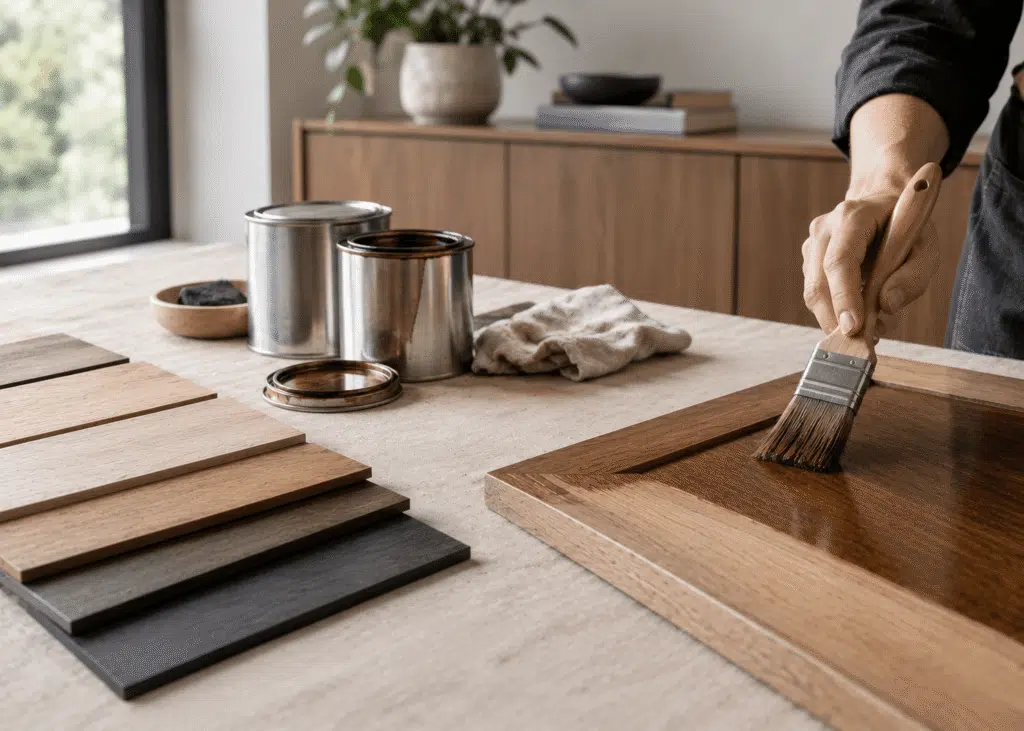
Staining changes the color of the wood, but it does not necessarily provide sufficient protection against everyday use on its own. For this reason, an additional finish is often applied to furniture.
Varnish can help protect a surface from moisture, dirt, friction, and other factors associated with daily use. Depending on the desired result, you can choose a matte, semi-matte, or glossy finish. In some cases, oils or other specialized protective products may also be used; however, their suitability depends on the specific wood stain chosen and the manufacturer's recommendations.
It is important that all products used are compatible with one another. This ensures not only the desired aesthetic effect but also a reliable finish suitable for the specific piece of furniture.
Furniture staining – why Is It worth choosing a professional for the job?
High-quality furniture staining requires not only the right products but also an understanding of wood properties, meticulous surface preparation, and a suitably chosen finishing system. Even minor differences in preparation or application can affect the final shade.
Professional wood staining allows for more precise control over color intensity, highlights the natural grain, and ensures a more uniform result. This is relevant both when restoring old furniture and when crafting new pieces tailored to specific interior design requirements.
If you want to change the appearance of wooden furniture while preserving the beauty of the natural wood, staining can be an excellent alternative to opaque painting. A carefully chosen shade, combined with a protective finish, helps create a result that is aesthetically pleasing, well-suited to your interior, and practical for everyday use.