
Painting milled MDF components is crucial for achieving a high-quality finish. MDF boards are widely used in furniture manufacturing due to their versatility, stability, and the ease with which they can be shaped. Milling the surface allows for the creation of decorative grooves, relief patterns, frames, and other design elements that give furniture a distinctive appearance. However, to ensure the final result is both aesthetically pleasing and durable, professional painting of the milled MDF components is essential.
Unlike finishing flat surfaces, painting milled components requires extra attention to complex areas, meticulous preparation, and the use of appropriate techniques. Even minor surface irregularities, unevenly coated grooves, or inadequately prepared edges can affect the final appearance of the product. Therefore, a high-quality result begins well before the first coat of paint is applied.
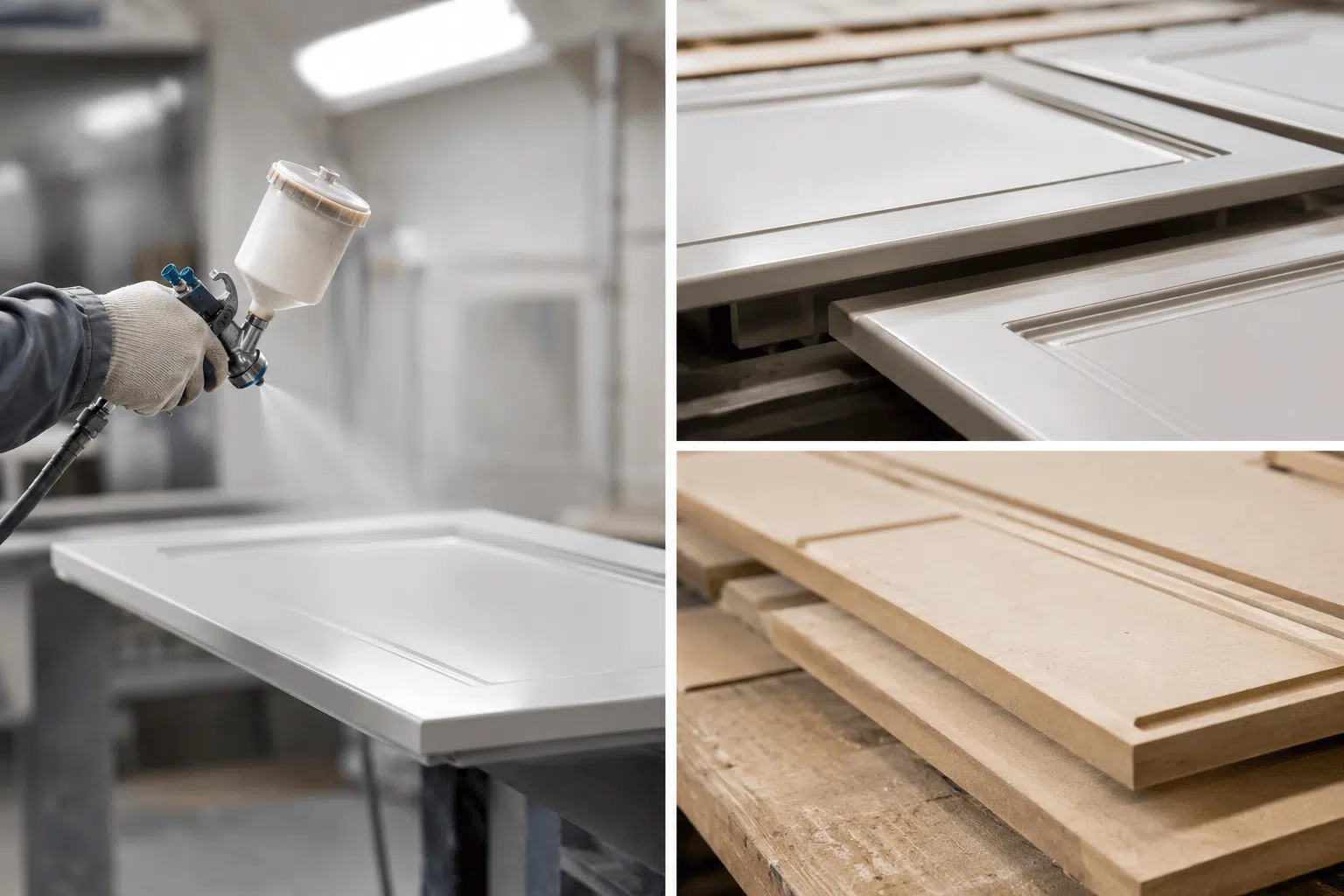
How does painting milled MDF parts differ from painting smooth surfaces?
The surface of flat MDF panels is generally easier to prepare and paint. In contrast, milled components feature grooves of varying depths, corners, raised areas, and other complex geometric elements that require individual attention.
When painting such components, it is important to ensure that the paint coating is uniform across the entire surface. Particular attention should be paid to internal corners, narrow grooves, and transitions between milled features. Achieving an even distribution of paint in these areas can be challenging; consequently, an unsuitable painting method may lead to variations in coating thickness, unevenness, or other visual defects.
Painting milled MDF components is particularly relevant when manufacturing furniture in classic, modern-classic, or other distinctive styles. Items frequently painted include kitchen doors, wardrobe fronts, decorative wall panels, furniture trim elements, and components produced for custom projects.
MDF Surface Preparation – The Foundation of Quality
One of the most important stages influencing the final finish is the proper preparation of the MDF surface. Even when using high-quality furniture paint and professional equipment, an insufficiently prepared surface can lead to poor adhesion or visible flaws in the finish.
First, the condition of the part, the quality of the milling, and the smoothness of the surface are assessed. If necessary, the surface is sanded to remove minor irregularities and to prepare areas where surface defects might otherwise become apparent later.
Special attention is paid to edges and milled areas. When processing MDF boards, these areas can be more porous than the smooth factory-finished surface, which may cause paint to be absorbed unevenly. For this reason, it is important to properly prepare not only the visible flat surfaces but also all edges, grooves, and internal corners.
Before proceeding with the work, it is also necessary to remove sanding dust and other debris. A clean surface ensures better coating adhesion and reduces the likelihood that unwanted irregularities will become visible after painting.
Why is priming MDF parts important?
Priming It is an important part of the painting process that helps prepare the surface for subsequent coating. A properly selected primer improves paint adhesion, helps even out the surface's absorbency, and creates favorable conditions for achieving a uniform final finish.
When priming milled MDF components, it is important to consider their shape and surface characteristics. Flat surfaces, exposed edges, and deeper grooves may absorb primer differently; therefore, every area requires adequate attention. If certain sections are not sufficiently coated, the final result may exhibit uneven gloss, color variations, or other surface irregularities.
After priming, depending on the system being used, additional sanding may be performed. This removes minor irregularities and creates the smoothest possible surface for the paint.
It is important to select a primer that is compatible with the intended paint system. The right combination of materials helps ensure good adhesion, an aesthetic appearance, and the durability of the coating.
Selection of painting technology
MDF panels can be painted using various methods; however, the specific technique should be selected based on the shape of the components, the intended use of the product, the desired surface effect, and the production volume.
In professional manufacturing, spray painting is frequently used, as it allows for the even coating of surfaces with complex shapes. With the right equipment and settings, it is possible to achieve a uniform finish while preserving the crisp lines of milled elements.
During the painting process, it is important to control the amount of paint, the spraying pressure, the distance from the surface, and the spray angle. An excessive amount of paint may accumulate in deeper grooves, while insufficient coverage can result in uneven color or a visible substrate structure.
It is equally important to adhere to the drying conditions specified by the manufacturer and the requirements for applying intermediate layers. Rushing the process or failing to observe the necessary technological intervals can compromise the quality of the coating, its adhesion, or the final appearance of the surface.
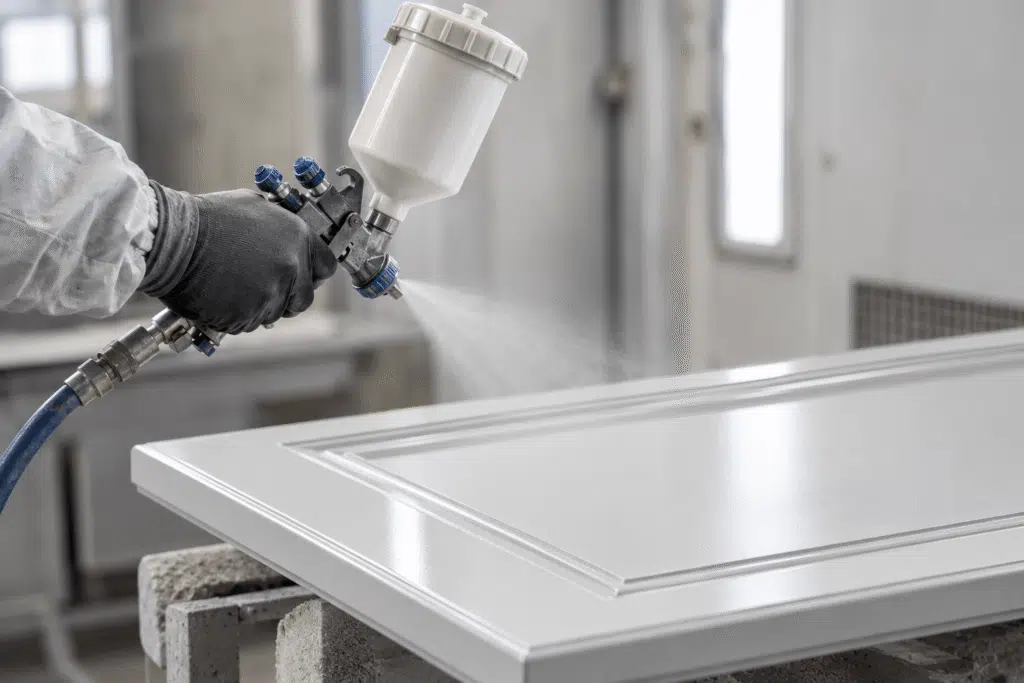
What determines an even coating and an aesthetically pleasing final result?
High-quality painting of furniture components depends on more than just the choice of paint. The final result relies on the entire process—from the preparation of the MDF board to the proper drying conditions.
Key factors:
Surface preparation. Thorough sanding and dust removal help prevent surface defects.
Machining of edges and grooves. Properly prepared complex areas allow for a more uniform coating.
Compatibility of primer and paint. Properly selected materials help ensure adhesion and the durability of the coating.
Control of painting parameters. Even distribution of the material reduces the likelihood of runs, spots, and variations in coating thickness.
Drying conditions. Temperature, humidity, and adherence to the manufacturer's recommendations influence the formation of the coating.
Final quality control. Before the parts are handed over, color uniformity, surface smoothness, and painting defects are evaluated.
The sequence of all these stages makes it possible to achieve a result that meets both the aesthetic and practical requirements of the product.
Painting of MDF facades based on custom designs
Painting MDF fronts offers extensive design possibilities, as one can choose from various colors, gloss levels, and surface finish options. This allows furniture to be tailored to a specific interior while maintaining overall design cohesion.
For custom projects, it is important not only to achieve the exact desired color but also to ensure a uniform appearance across all components. When painting multiple facades or decorative elements of varying dimensions, it is essential to maintain quality control over the entire order. This is particularly critical when the components are to be installed adjacent to one another, as any discrepancies in shade or gloss would be readily apparent.
Professional painting of furniture partsIt enables the realization of both standard and more complex furniture and interior solutions. Meticulous preparation and appropriate technology help preserve the distinctiveness of milled shapes and achieve a clean, seamless surface.
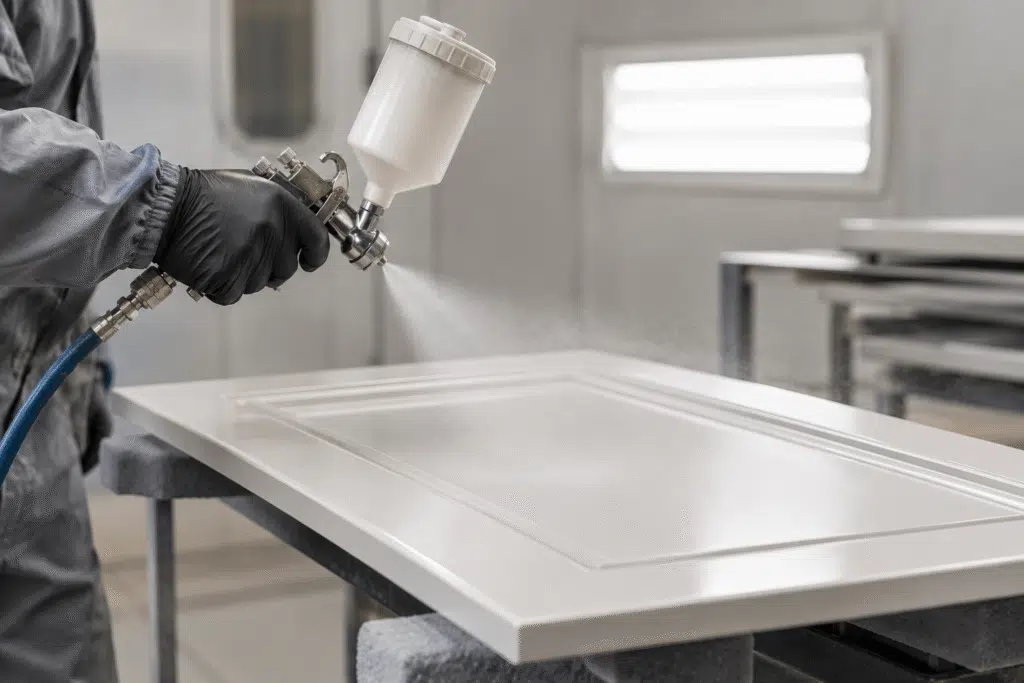
High-quality painting of milled MDF components begins with the right process.
Painting milled MDF components requires technical expertise, meticulousness, and consistent management of every stage of the production process. Proper surface preparation, careful processing of edges and grooves, high-quality priming, and the chosen painting technique are the key factors that determine the final result.
Whether painting kitchen fronts, cabinet doors, decorative panels, or custom-made furniture components, every stage influences their appearance and the durability of the finish.
For those seeking professional painting of MDF panels, it is worth choosing a service provider that evaluates the specific characteristics of the components, selects the appropriate technology, and pays careful attention to the entire process. This ensures that even complex, milled parts look aesthetically pleasing and that the final finish meets the project's requirements.